
How Infrastructure Investment Is Driving Industrial Demand
Infrastructure is easy to overlook when evaluating commercial real estate.
We see the building, the tenant, the rent, and the surrounding properties. But underneath all of those factors is a larger system that determines how effectively businesses can operate: roads, bridges, ports, rail networks, airports, utilities, broadband, and other infrastructure.
When that infrastructure improves, the effects can reach far beyond construction sites. Better connectivity can make markets more accessible, reduce transportation friction, attract businesses, and increase demand for industrial space.
For investors and brokers, understanding this relationship can provide another useful lens for evaluating industrial real estate.
At CommercialGRP, we focus on industrial properties generally between 50,000 and 120,000 square feet, along with select retail opportunities. As we evaluate acquisitions, infrastructure is one of the factors that can help us understand why a particular market or property may have long-term potential.

Infrastructure and Industrial Real Estate Are Closely Connected
Industrial businesses depend on movement.
Manufacturers need access to suppliers and customers. Distributors need efficient transportation routes. Logistics companies need connectivity between warehouses and population centers.
That means infrastructure can directly influence the usefulness of an industrial property.
A building located near a major highway interchange may offer logistical advantages over a similar building farther away from transportation infrastructure.
Likewise, improvements to a regional road network, port, airport, or rail connection can change how businesses view a particular market.
This doesn’t mean every infrastructure project automatically creates real estate value.
The important question is:
Does the investment improve the economic fundamentals that support demand for the property?

1. Roads and Highways Can Expand Industrial Accessibility
Highway access is one of the most visible infrastructure factors affecting industrial real estate.
Businesses often prioritize properties that allow employees, suppliers, and freight to move efficiently.
When highways are expanded, interchanges are improved, or congestion is addressed, previously constrained locations can become more competitive.
For industrial investors, this can influence:
- Delivery times
- Transportation costs
- Labor accessibility
- Tenant demand
- Site selection decisions
- Regional connectivity
However, infrastructure should always be evaluated in context.
A new interchange may improve access, but investors still need to consider land availability, competing supply, demographics, labor, zoning, and tenant demand.
Infrastructure is a fundamental, not a substitute for due diligence.

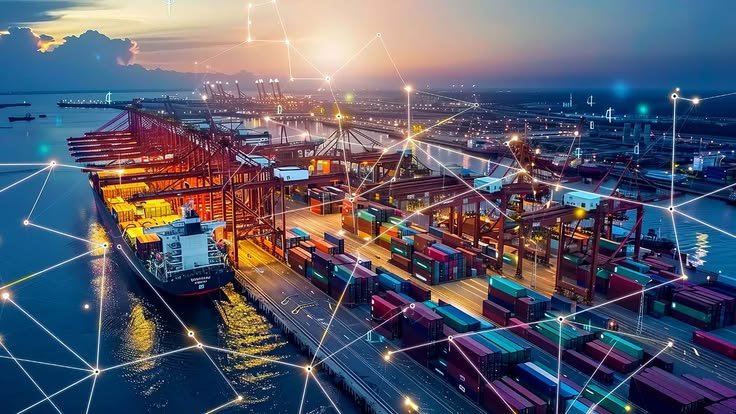
2. Ports and Trade Infrastructure Support Distribution Demand
Ports can have an enormous influence on regional industrial markets.
When goods enter a region through a port, they need somewhere to go.
That creates demand for transportation, warehousing, distribution, manufacturing, and related services.
Improvements to port capacity or surrounding transportation infrastructure can therefore affect industrial demand well beyond the immediate waterfront.
For investors, the important consideration is not simply whether a property is “near a port.”
It’s whether the property is positioned within an economically meaningful logistics network.
That distinction matters when evaluating the long-term potential of an industrial asset.
3. Rail Infrastructure Can Strengthen Industrial Corridors
Rail remains an important component of the movement of goods across the United States.
Properties with access to rail infrastructure can serve specific industries particularly well, including manufacturing, distribution, bulk materials, and other users with transportation-intensive operations.
Rail improvements can also contribute to the attractiveness of established industrial corridors.
But again, the relationship between infrastructure and real estate is highly property-specific.
A rail connection has value when it supports actual tenant requirements.
That’s why we look at infrastructure alongside tenant demand and property functionality rather than evaluating it in isolation.
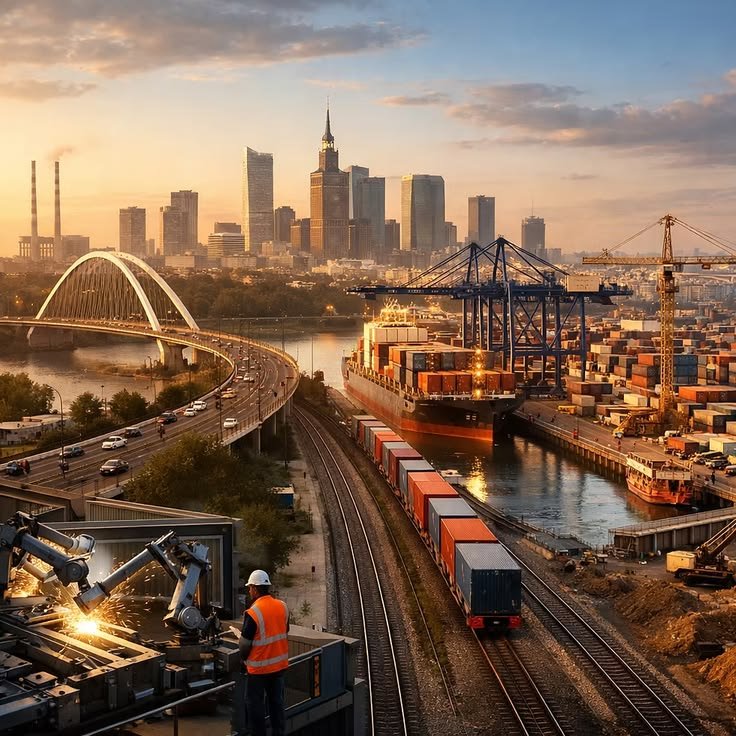
4. Infrastructure Can Influence Where Businesses Locate
Businesses constantly evaluate the cost and efficiency of their operations.
When infrastructure improves in a particular market, it can change that equation.
A company may find that a location with better highway access allows it to serve a larger customer base.
A manufacturer may benefit from improved freight connections.
A distributor may gain access to a larger labor pool.
Over time, these decisions can contribute to increased demand for commercial space.
That creates an important connection between infrastructure investment and real estate:
Infrastructure can influence business decisions, and business decisions influence real estate demand.

5. Infrastructure Investment Can Support Market Growth
Infrastructure doesn’t operate independently of population and economic growth.
A region experiencing population growth may require improvements to transportation networks, utilities, schools, public services, and other systems.
Those improvements can help support continued economic activity.
From an investment perspective, we want to understand whether infrastructure investment is part of a broader growth story.
Are businesses expanding?
Is the labor force growing?
Is population increasing?
Is new development occurring?
Are existing industrial properties maintaining strong occupancy?
These questions provide more context than looking at infrastructure spending alone.
Our broader approach to market analysis is explored in The Key Indicators We Track Before Investing in Any Market.

6. Infrastructure Can Create Both Opportunities and Challenges
Infrastructure investment is not always positive for every property.
Construction can temporarily create traffic problems, access restrictions, noise, or disruptions for tenants.
A new highway project could also redirect traffic patterns in ways that benefit some properties while reducing visibility or accessibility for others.
That is why our approach is intentionally detail-oriented.
We don’t simply ask whether a project is being built.
We ask:
- What is being improved?
- Where is the investment occurring?
- When will it be completed?
- Who benefits?
- How could traffic patterns change?
- What businesses are likely to benefit?
- Could the project affect tenant demand?
- Does it improve the property’s competitive position?
Those questions help turn a broad infrastructure story into property-level analysis.

7. Utilities Are Part of the Industrial Equation
Transportation gets most of the attention, but utilities can be just as important.
Industrial users may have significant requirements for:
- Electricity
- Water
- Natural gas
- Wastewater
- Telecommunications
- Broadband
- Stormwater management
As industrial operations become more technology-driven and energy-intensive, utility infrastructure can become increasingly relevant to site selection.
A property with adequate infrastructure may be able to accommodate a broader range of potential tenants than one with significant capacity limitations.
For investors, understanding those capabilities can be an important part of evaluating future leasing potential.

8. Infrastructure Can Strengthen Existing Industrial Markets
Not every infrastructure opportunity involves an emerging market.
Sometimes the most compelling opportunity is in an established industrial market that is receiving additional investment.
Existing industrial corridors may already have:
- Established tenants
- Transportation networks
- Skilled labor
- Suppliers
- Supporting businesses
- Developed infrastructure
Additional investment can reinforce those advantages.
This is one reason we don’t automatically assume that new markets are better markets.
Sometimes improving an established market can create a stronger long-term environment for industrial real estate.

9. Infrastructure Should Be Considered Alongside Supply
Infrastructure improvements can increase demand, but investors also need to understand the supply side.
If significant industrial development is occurring at the same time, new supply could offset some of the demand created by infrastructure improvements.
That’s why we look at both sides of the equation.
A market may have excellent infrastructure but also an enormous pipeline of new industrial construction.
Another market may have strong infrastructure, limited available land, and relatively constrained new supply.
Those situations can create very different investment dynamics.
Our goal is to understand the full picture before determining whether an acquisition fits our strategy.

10. Infrastructure Can Create Long-Term Community Benefits
There is also a broader reason infrastructure matters to us.
Infrastructure isn’t just about real estate.
Better transportation networks can improve access to employment, support local businesses, connect communities, and make it easier for goods and services to move.
When industrial properties become more productive, they can support businesses and jobs within the surrounding community.
That aligns closely with CommercialGRP’s Core Focus: transforming communities and improving lives through thoughtful real estate investment.
For us, successful investing isn’t simply about acquiring a building.
It’s about understanding how that building fits into the economic environment around it.

10. Infrastructure Can Create Long-Term Community Benefits
There is also a broader reason infrastructure matters to us.
Infrastructure isn’t just about real estate.
Better transportation networks can improve access to employment, support local businesses, connect communities, and make it easier for goods and services to move.
When industrial properties become more productive, they can support businesses and jobs within the surrounding community.
That aligns closely with CommercialGRP’s Core Focus: transforming communities and improving lives through thoughtful real estate investment.
For us, successful investing isn’t simply about acquiring a building.
It’s about understanding how that building fits into the economic environment around it.

Why Relationships Matter When Evaluating Emerging Opportunities
Infrastructure projects can take years to plan, approve, fund, and complete.
That means information can develop gradually.
Maintaining strong relationships with brokers, property owners, local professionals, and other industry participants can help investors better understand what is happening on the ground.
This is where our commitment to Outstanding Communication becomes particularly important.
We want our broker relationships to be collaborative and transparent.
If a broker brings us an opportunity affected by a major infrastructure project, we want to understand the property, the project, and the potential implications.
We also want to provide clear feedback so brokers know whether an opportunity fits our acquisition criteria.
Strong relationships create better information.
Better information creates better decisions.

Our Approach to Infrastructure-Driven Opportunities
At CommercialGRP, our acquisition strategy remains focused on properties that fit our target profile of 50,000–120,000 SF industrial assets and select retail opportunities.
When infrastructure investment enters the equation, we consider it as part of a larger framework.
We ask whether the investment improves access, supports economic growth, strengthens tenant demand, or increases the long-term functionality of a market.
Then we evaluate the property itself.
That disciplined process allows us to remain Motivated & Committed without becoming overly aggressive, Self-Reliant & Detail-Oriented without losing sight of the bigger picture, and committed to Honesty and Integrity throughout the transaction.

Looking Beyond the Building
The strongest commercial real estate opportunities often require investors to look beyond the four walls of the property.
Who is moving into the market?
Where are businesses expanding?
How are people and goods moving?
What infrastructure is being improved?
What economic activity is being created?
And perhaps most importantly:
Will these changes make this location more useful to businesses five, ten, or twenty years from now?
Those questions can help investors distinguish between short-term headlines and meaningful long-term fundamentals.
Infrastructure investment doesn’t automatically make a property a good acquisition.
But when infrastructure improvements align with strong economic fundamentals, durable tenant demand, and a well-positioned property, they can become an important part of the investment story.

Let’s Connect
If you’re a broker with an industrial or retail opportunity that may benefit from infrastructure investment in its surrounding market, we’d welcome the conversation.
And if you’re an investor interested in how CommercialGRP evaluates markets, properties, and long-term value-creation opportunities, we’d be glad to connect.
Our focus remains straightforward: build strong relationships, evaluate opportunities carefully, communicate openly, and pursue investments that create lasting value for investors and the communities we serve.
If you have an opportunity that fits our profile—or simply want to start a conversation—let’s connect and explore what we can build together.
This content is for informational purposes only and should not be considered legal, tax, financial, or investment advice. Investors should consult qualified professionals regarding their individual circumstances and applicable IRS regulations.