
Core vs. Value-Add vs. Opportunistic: Where Industrial Fits Today
Industrial real estate is often discussed as though every property belongs to the same investment category.
It doesn’t.
An occupied, well-maintained warehouse with strong tenants and limited near-term capital needs presents a very different investment profile from a partially vacant property that requires leasing, improvements, and operational work.
That distinction is important because investors don’t just need to know what asset they are buying. They need to understand what investment strategy they are actually pursuing.
Three common categories help frame that conversation:
- Core
- Value-add
- Opportunistic
At CommercialGRP, our focus is on industrial properties generally ranging from 50,000 to 120,000 square feet, along with select retail opportunities. Within that profile, we evaluate where a property sits on the risk-and-return spectrum and whether the opportunity fits our acquisition strategy.
The objective isn’t to label every deal.
It’s to understand what has to happen for an asset to create value—and whether that strategy is realistic.

What Does “Core” Mean in Industrial Real Estate?
Core properties are generally considered the more stable end of the commercial real estate spectrum.
They often have characteristics such as:
- Strong locations
- High occupancy
- Creditworthy or established tenants
- Long-term leases
- Limited near-term capital requirements
- Predictable operating performance
- Strong market fundamentals
The investment thesis is typically centered on stability and preservation of capital, rather than significant physical or operational transformation.
For example, an industrial property that is fully occupied by established tenants with several years remaining on its leases may have a relatively straightforward business plan.
The investor isn’t necessarily purchasing the property because it needs to be transformed.
The appeal may be the stability of the existing income and the quality of the underlying asset.
The Trade-Off
Lower perceived risk can come with a trade-off.
Because core properties tend to attract more competition from investors seeking stability, acquisition pricing can be stronger.
That can reduce the amount of immediate upside available through repositioning.
This doesn’t make core investments unattractive.
It simply means investors should understand what they are paying for.

What Is Value-Add Industrial Real Estate?
Value-add investments sit somewhere between core stability and higher-risk opportunistic strategies.
The property may already have solid fundamentals, but there is an identifiable opportunity to improve its performance.
That could involve:
- Increasing occupancy
- Renovating outdated areas
- Improving property functionality
- Repositioning the tenant mix
- Bringing rents closer to market levels
- Completing targeted capital improvements
- Improving property management
- Addressing deferred maintenance
The key word is potential.
The property isn’t necessarily broken.
Instead, there is a reasonable path to making it better.
For many investors, this creates an attractive balance between existing stability and identifiable upside.

Why Value-Add Can Be Interesting in the 50K–120K SF Segment
Mid-sized industrial properties can present opportunities where operational improvements have a meaningful effect on overall performance.
Consider a hypothetical 80,000-square-foot industrial property with:
- A strong location
- Functional building characteristics
- Existing tenants
- Some vacancy
- Below-market rents on certain leases
- Moderate capital improvement needs
The property may already produce income.
But the investment thesis could include improving occupancy, completing targeted improvements, and bringing certain rents closer to prevailing market levels.
If those assumptions are supported by market evidence, the investor may have multiple potential avenues for creating value.
That’s very different from simply hoping the market appreciates.
Value-add investing should have a defined business plan behind it.

What Is Opportunistic Industrial Real Estate?
Opportunistic investments generally involve a higher level of execution risk.
The property may require significant transformation before it reaches its intended performance.
Examples can include:
- Major redevelopment
- Significant vacancy
- Extensive renovations
- Ground-up development
- Substantial repositioning
- Complex entitlement processes
- Major tenant restructuring
The potential upside can be significant, but so can the uncertainty.
An opportunistic strategy often depends on multiple things going right.
That means investors need to examine assumptions carefully.

The Important Question: Where Does Industrial Fit Today?
The answer is:
Industrial can fit into all three categories.
The asset class itself doesn’t determine the strategy.
The individual property does.
Two industrial buildings in the same market can have completely different risk profiles.
One might be:
95% occupied, recently renovated, and leased to established tenants.
Another might be:
55% occupied, functionally outdated, and in need of substantial capital investment.
Both are industrial.
But they are not the same investment.
This is why acquisition discipline matters.
At CommercialGRP, we don’t simply ask whether a property is industrial.
We ask whether the property, market, financials, tenant profile, physical condition, and value-creation opportunity work together.
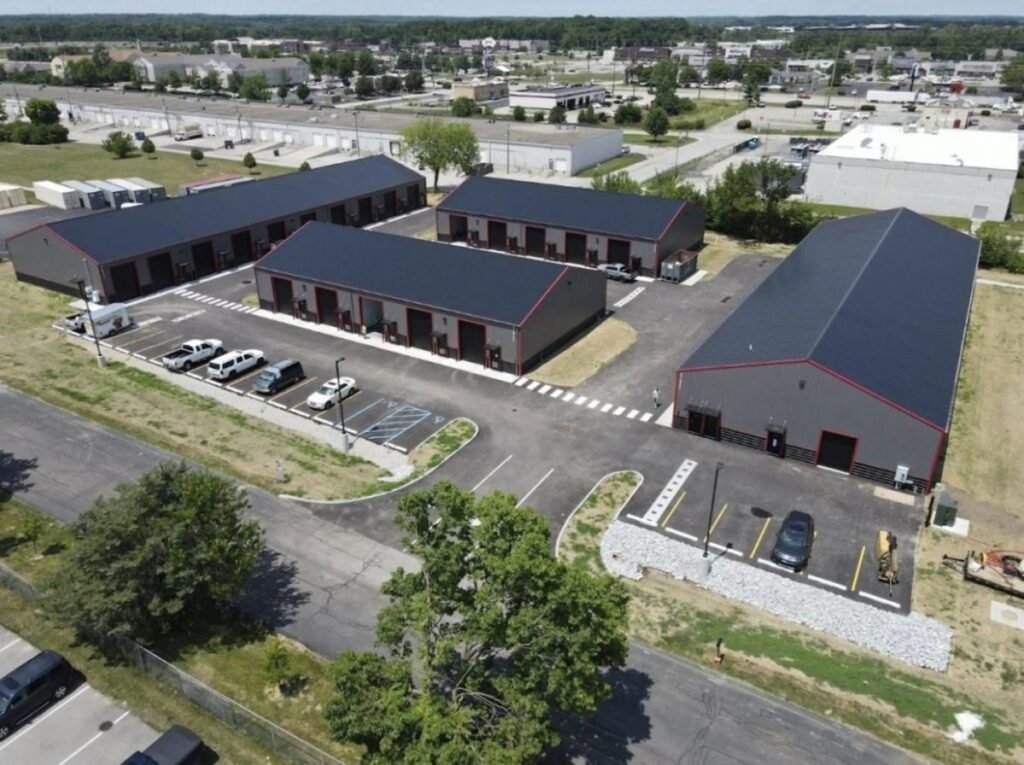
How We Think About the Risk-Return Spectrum
There is no universal rule that says core is better than value-add or value-add is better than opportunistic.
Instead, each strategy represents a different combination of:
Risk + execution + potential return.
A simplified framework looks like this:
Strategy | Typical Profile | Primary Focus |
Core | Stable, occupied, strong asset | Income & preservation |
Value-Add | Stable foundation with improvement opportunities | Income + value creation |
Opportunistic | Higher execution and development risk | Significant transformation |
The key is understanding the assumptions behind each category.
A higher projected return doesn’t automatically make an investment better.
If achieving that return requires overly aggressive rent growth, unrealistic construction costs, or an uncertain exit valuation, the additional return may not adequately compensate for the risk.
This is why our acquisition philosophy emphasizes disciplined underwriting.
As we explain in Risk vs. Return: How We Evaluate Industrial Investments, the objective isn’t simply to find the highest potential return. It’s to determine whether the potential reward appropriately compensates for the risks involved.

The Business Plan Matters More Than the Label
One mistake investors can make is relying too heavily on labels.
Calling a property “value-add” doesn’t automatically create value.
The question should always be:
What specifically will we do to improve the asset?
For example:
If the opportunity is leasing-related:
What evidence supports the projected rental rates?
If the opportunity involves renovations:
What will the improvements cost?
If occupancy is expected to increase:
What does tenant demand look like?
If the plan depends on refinancing:
What assumptions support the future financing strategy?
If the investment depends on an eventual sale:
What supports the projected exit valuation?
A strong business plan connects each assumption to evidence.

Data Should Support the Strategy
This is where market analysis becomes critical.
Before deciding that an industrial property has value-add potential, investors should examine:
- Market vacancy
- Asking and achieved rents
- Recent lease transactions
- New construction
- Tenant demand
- Comparable sales
- Absorption
- Transportation infrastructure
- Employment trends
- Local economic activity
The goal is to determine whether the property’s potential is supported by the market.
For example, if an investment thesis assumes substantial rent growth, but competing properties are offering concessions and new supply is entering the market, that assumption deserves additional scrutiny.
Data doesn’t eliminate uncertainty.
But it can help investors make uncertainty more measurable.

The Role of Property Condition
Physical condition can also determine where an asset falls on the risk spectrum.
A property with modern systems, functional loading capacity, adequate parking, and minimal deferred maintenance may require relatively little capital.
Another property may require:
- Roof work
- HVAC replacement
- Parking improvements
- Exterior upgrades
- Electrical improvements
- Tenant improvements
- Life-safety upgrades
Those requirements don’t automatically make a property a bad investment.
In some cases, they may create the opportunity.
But the cost, timing, and execution risk need to be accurately understood.
This is where being Self-Reliant & Detail-Oriented matters.
At CommercialGRP, we believe proactive evaluation is more valuable than discovering problems after an acquisition.
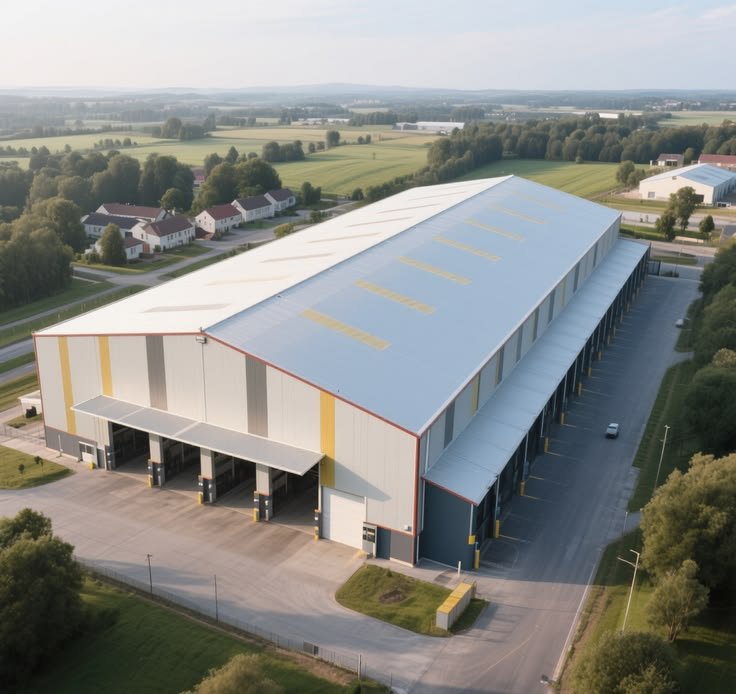
Tenant Quality Can Change the Investment Profile
The physical building is only part of the equation.
Tenants matter.
Investors should consider:
- Who occupies the property?
- How financially stable are the tenants?
- When do leases expire?
- How concentrated is the rent roll?
- Are rents above or below market?
- How difficult would replacement tenants be to find?
- How dependent is the investment on a particular tenant?
A strong tenant can contribute stability.
A lease approaching expiration can create either risk or opportunity.
Again, context matters.
A lease rollover isn’t automatically negative.
If the current rent is significantly below market and tenant demand is strong, the situation could potentially create upside.
But that upside needs to be supported by evidence—not assumptions.

Why Relationships Matter in Every Strategy
Whether a property is core, value-add, or opportunistic, execution depends on people.
Brokers provide market intelligence and property access.
Tenants influence leasing performance.
Lenders affect the capital structure.
Contractors and vendors influence execution.
Property managers affect operations.
Investors provide the capital and trust required to execute the strategy.
That’s why Outstanding Communication is one of CommercialGRP’s Core Values.
We believe strong relationships are built by communicating clearly, setting realistic expectations, and addressing issues proactively.
Our approach to broker relationships is discussed in How Strong Broker Relationships Lead to Better Deal Flow.
The best opportunities often come through relationships where both sides understand how the other operates.

Where CommercialGRP Focuses
Our acquisition strategy is intentionally focused.
We look primarily at industrial properties between 50,000 and 120,000 square feet, along with select retail opportunities.
Within that universe, we aren’t limited to one risk category.
A property may have characteristics of a core investment.
Another may present a compelling value-add opportunity.
A third may require too much execution risk for our strategy.
The important thing is that the opportunity fits our criteria and that the path to value creation is understandable.
That’s why Motivation and Commitment are essential to our process.
We aren’t motivated by deal volume for its own sake.
We’re motivated by finding opportunities where disciplined acquisition and execution can produce lasting value.

The Community Impact Matters, Too
Investment strategy shouldn’t exist separately from the real-world impact of a property.
Industrial buildings support businesses.
Businesses create jobs.
Retail properties provide services and gathering places.
Well-maintained commercial properties can contribute to stronger neighborhoods and more productive local economies.
That is part of CommercialGRP’s broader Core Focus: transforming communities and improving lives through thoughtful commercial real estate investment.
Value creation isn’t only about a spreadsheet.
It can also mean taking an underutilized property and helping return it to productive use.
It can mean supporting a growing business with better space.
It can mean improving an asset so that it serves tenants and customers more effectively.
Financial performance and community impact don’t have to be opposing goals.
When the right opportunity is identified and executed responsibly, they can reinforce each other.

So, Which Strategy Is Best?
There isn’t one answer.
Core may appeal to investors prioritizing stability.
Value-add may appeal to investors seeking a balance between existing income and identifiable opportunities for improvement.
Opportunistic strategies may appeal to investors who are comfortable with greater execution risk in pursuit of potentially higher returns.
The important thing is not choosing the strategy with the most attractive label.
It’s understanding:
What are we buying?
What are we paying?
What needs to happen?
What could go wrong?
What evidence supports the plan?
And ultimately:
Is the potential return appropriate for the risk and effort required?

A Disciplined Approach to Industrial Investing
Industrial real estate remains a broad and diverse investment category.
Within our 50,000–120,000 square-foot focus, we see opportunities across different levels of risk and value creation.
But our approach remains consistent:
Evaluate carefully.
Communicate clearly.
Question assumptions.
Understand the risks.
Execute proactively.
Create lasting value.
That discipline allows us to pursue opportunities without becoming dependent on market hype or transaction volume.
And it helps us build the kind of long-term relationships that matter to investors, brokers, tenants, and communities.

Let’s Connect
If you’re an investor evaluating industrial real estate and want to better understand how different strategies may fit your objectives, I welcome the conversation.
And if you’re a broker with a 50,000–120,000 square-foot industrial property or a retail opportunity that may fit our acquisition profile, I’d be glad to learn more about it.
At CommercialGRP, we’re not looking simply for the next transaction. We’re looking for the right opportunity, the right partners, and the right strategy to create lasting value.
If that sounds aligned with how you approach commercial real estate, let’s start a conversation.
This content is for informational purposes only and should not be considered legal, tax, financial, or investment advice. Investors should consult qualified professionals regarding their individual circumstances and applicable IRS regulations.