
The Role of Property Improvements in Driving NOI Growth
When investors evaluate a commercial real estate opportunity, the conversation often starts with the numbers: purchase price, rent, occupancy, cap rate, and projected returns.
But there is another question that can be just as important:
What can be improved?
For CommercialGRP, property improvements are not simply about making a building look better. The right improvements can strengthen tenant appeal, improve operational efficiency, support leasing activity, and ultimately contribute to stronger Net Operating Income (NOI).
Our focus is on industrial properties generally between 50,000 and 120,000 square feet, along with select retail opportunities. Within that profile, we look for properties where thoughtful improvements can create meaningful value for investors while making the asset more functional and useful for the businesses and communities it serves.

What Is NOI and Why Does It Matter?
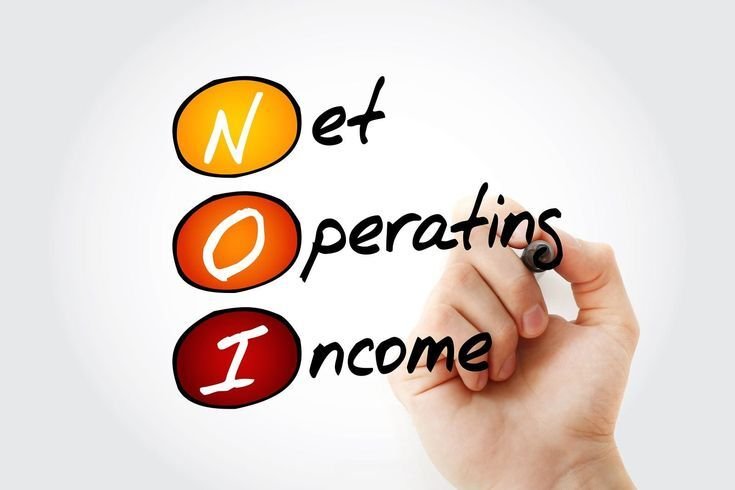
Net Operating Income, or NOI, is one of the fundamental measures used to evaluate a commercial property’s operating performance.
At a basic level:
NOI = Operating Revenue − Operating Expenses
Revenue can include rental income and other property-related income, while operating expenses may include items such as maintenance, property management, insurance, taxes, utilities, and other costs associated with operating the property.
When improvements help increase revenue or reduce operating expenses, they can contribute to NOI growth.
But the relationship isn’t always immediate.
A successful improvement strategy requires understanding what the property needs, what tenants value, how much the work will cost, and whether the expected benefit justifies the investment.
That is where disciplined analysis becomes essential.
Not Every Improvement Creates Value
One of the most important principles we follow is that improvement does not automatically equal value creation.
A property can receive significant capital investment and still fail to produce a meaningful financial benefit.
For example, an owner might spend heavily on cosmetic upgrades that tenants don’t actually value.
The better question is:
Will this improvement improve the property’s competitive position, tenant demand, operating efficiency, or income potential?
If the answer is unclear, the investment deserves closer examination.
We want improvements to have a purpose.

1. Improving Curb Appeal and Property Presentation
First impressions matter.
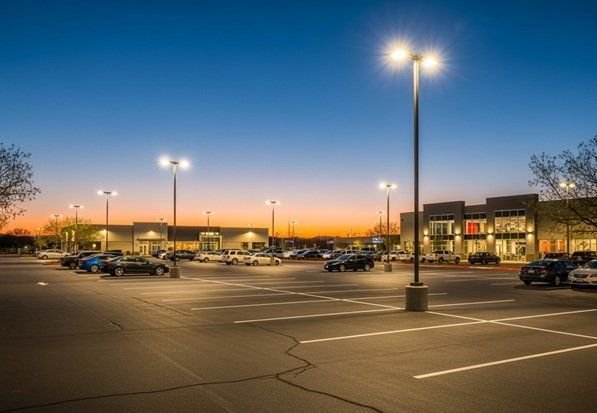
For industrial and retail properties alike, exterior appearance can influence how prospective tenants, customers, employees, and visitors perceive the asset.
Improvements might include:
- Exterior painting
- Landscaping
- Updated signage
- Parking lot maintenance
- Lighting
- Entry improvements
- Common-area enhancements
- Removal of outdated or damaged elements
These changes may not directly increase rent overnight.
However, a well-maintained property can present more competitively during leasing efforts and help demonstrate that the asset is professionally managed.
For retail properties in particular, visibility and presentation can have an especially meaningful impact on tenant and customer perception.
2. Improving Industrial Functionality
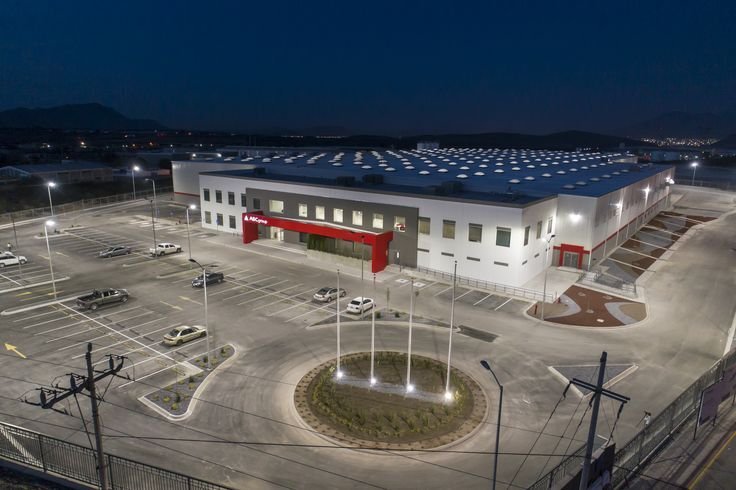
For industrial properties, functionality is often more important than aesthetics.
Tenants care about whether the building works for their operations.
Potential improvements may involve:
- Loading areas
- Dock functionality
- Truck circulation
- Warehouse lighting
- Office configuration
- Security systems
- Parking
- Storage areas
- Building access
- Power capacity
An improvement that makes a tenant’s business easier to operate can potentially make the property more competitive.
That can support tenant retention and leasing activity.
For us, this is one reason property evaluation goes beyond simply looking at square footage.
A 70,000-square-foot building isn’t valuable simply because it has 70,000 square feet.
Its value is influenced by how effectively that space can serve the needs of businesses.

3. Reducing Operating Expenses
NOI can improve from the revenue side, but expense management matters too.
Certain property improvements can reduce recurring operating costs.
Examples can include:
- Energy-efficient lighting
- HVAC upgrades
- Water-efficiency improvements
- Building controls
- Roofing improvements
- Preventative maintenance programs
- More efficient landscaping systems
The economics need to be evaluated carefully.
A project may require significant upfront capital but produce meaningful savings over time.
Another improvement may have a relatively small cost but produce immediate operational benefits.
We evaluate these opportunities based on the specific property rather than assuming every upgrade will produce the same result.

4. Improving Tenant Experience
Commercial real estate is ultimately about people and businesses using space.
That means tenant experience matters.
For an industrial tenant, a better loading area or improved building access may make daily operations more efficient.
For a retail tenant, better parking, lighting, signage, or common areas may create a more attractive environment for customers.
When improvements make a property easier or more enjoyable to use, they can contribute to stronger tenant relationships.
And strong tenant relationships can support long-term property performance.
This aligns closely with our Core Value of Outstanding Communication.
We believe understanding what tenants and brokers are experiencing is essential to identifying improvements that actually matter.
5. Renovations Can Support Better Leasing
A property doesn’t necessarily need to be completely renovated to become more competitive.
Sometimes targeted improvements can make a meaningful difference.
For example, an industrial property with outdated office space might benefit from a practical reconfiguration.
A property with poor lighting might become more attractive after an upgrade.
A retail property with outdated signage may benefit from clearer visibility.
The goal is not to renovate for renovation’s sake.
The goal is to identify the improvements that address actual market needs.
This is especially important when evaluating partially occupied or underutilized properties.

6. Improvements Can Help Reduce Vacancy
Vacancy directly affects property revenue.
When space sits empty, the owner may lose rental income while continuing to carry many of the property’s operating costs.
Strategic improvements can sometimes make vacant space easier to lease.
That could mean:
- Improving the space’s functionality
- Updating finishes
- Making the layout more flexible
- Improving accessibility
- Addressing deferred maintenance
- Upgrading building systems
- Improving exterior presentation
But again, the improvement needs to match the market.
A renovation that looks attractive on paper may not solve the actual reason a space is vacant.
That’s why we want to understand tenant demand before committing capital.
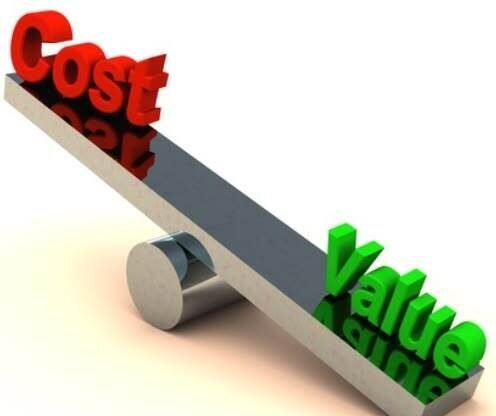
7. Understanding the Cost-to-Value Relationship
Every improvement has a cost.
That cost should be compared with the potential benefit.
We ask questions such as:
- How much will the improvement cost?
- How long will it take?
- Will it affect current tenants?
- Will it increase rental demand?
- Could it reduce expenses?
- Could it improve retention?
- Could it reduce future maintenance?
- How long is the expected useful life?
- Does the improvement strengthen the property’s competitive position?
This is where our Core Value of being Self-Reliant & Detail-Oriented becomes important.
We don’t want to rely on broad assumptions.
We want to understand the details behind the proposed improvement.
8. NOI Growth Can Have a Compounding Effect on Value
One of the most important concepts investors should understand is the relationship between NOI and property value.
In simplified terms, commercial properties are often valued using a capitalization rate:
Value = NOI ÷ Capitalization Rate
For example, if a property’s NOI increases while the market capitalization rate remains constant, the implied value can increase.
Imagine a property producing $500,000 in annual NOI.
At a hypothetical 7% capitalization rate:
$500,000 ÷ 0.07 = approximately $7.14 million
If improvements and operational changes increase NOI to $600,000:
$600,000 ÷ 0.07 = approximately $8.57 million
That represents a potential increase in implied value of approximately $1.43 million.
This is a simplified illustration—not a prediction or guarantee of investment performance.
Actual property values depend on many factors, including market conditions, property quality, tenant risk, financing, comparable transactions, and investor demand.
But the example demonstrates why NOI growth deserves careful attention.

9. Improvements Should Support the Investment Strategy
The best improvement plan is not necessarily the largest one.
It is the one that supports the property’s investment strategy.
For example, a value-add acquisition may justify targeted capital expenditures designed to improve occupancy, functionality, or income.
Another property may already be operating efficiently and require primarily preventative maintenance.
The strategy should depend on the asset.
This is one reason we evaluate properties individually rather than applying a one-size-fits-all improvement plan.
As we discuss in How We Underwrite Industrial Deals: A Step-by-Step Breakdown, disciplined underwriting requires understanding both the current condition of the property and the assumptions behind its future performance.

10. Timing Matters
Even a worthwhile improvement can become less attractive if the timing is wrong.
An improvement may make sense immediately after acquisition.
Another may be better completed when a lease expires.
Some projects may need to be coordinated with tenant improvements or planned maintenance.
Timing can affect:
- Cash flow
- Tenant disruption
- Construction costs
- Leasing schedules
- Capital requirements
- Expected returns
That is why proactive planning is so important.
Our approach is to identify potential improvements early and evaluate how they fit into the property’s broader operating plan.

Property Improvements Should Create Value for More Than Investors
At CommercialGRP, we believe property improvements can serve a purpose beyond financial performance.
A better-maintained industrial building can help a local business operate more effectively.
A revitalized retail property can provide a more attractive environment for businesses and customers.
An underutilized asset brought back into productive use can contribute to surrounding economic activity.
That connects directly to our Core Focus: transforming communities and improving lives.
We want the properties we acquire to become more functional, more productive, and more valuable—not only for investors, but also for the people and businesses that depend on them.

Improvements, Relationships, and Execution
A strong improvement strategy also depends on relationships.
Brokers can provide insight into what tenants are requesting.
Property managers can identify recurring operational issues.
Contractors can help determine what improvements are realistic.
Tenants can explain what would make the space more functional.
Investors need clear information about how capital is being deployed and why.
That is why Motivation and Commitment, Excellent Communication, Self-Sufficiency and Attention to Detail, and Honesty and Integrity are not simply words on a page.
They influence how we approach transactions and property ownership.
We want our partners to know what we’re doing, why we’re doing it, and what we expect the improvement to accomplish.

Measuring the Results
Once improvements are completed, the process isn’t finished.
We need to evaluate whether the investment accomplished its objective.
Depending on the project, that could mean tracking:
- Occupancy
- Rental rates
- Tenant retention
- Operating expenses
- Maintenance costs
- Leasing activity
- Tenant feedback
- Net Operating Income
Measurement creates accountability.
If an improvement was intended to reduce expenses, we should be able to evaluate the results.
If it was intended to support leasing, we should monitor leasing performance.
This feedback can help inform future decisions.
Our broader approach to value creation is explored in From Vacancy to Value: Case Studies of Industrial Properties We’ve Transformed.

The Right Improvements Can Unlock Hidden Potential
A commercial property doesn’t always need a complete transformation to become more valuable.
Sometimes the opportunity is already there.
It may simply require the right combination of analysis, capital, management, and execution.
That’s what makes property improvements so important in value-add real estate.
The goal isn’t to spend more.
The goal is to spend intelligently.
At CommercialGRP, we look for opportunities where thoughtful improvements can strengthen the asset, support tenant demand, improve operations, and contribute to long-term value.

Let’s Connect
If you’re a broker with an industrial property between 50,000 and 120,000 square feet or a retail opportunity where strategic improvements could unlock additional potential, we’d welcome the conversation.
And if you’re an investor interested in how CommercialGRP evaluates value-creation opportunities, we’d be happy to connect and share more about our approach.
The best opportunities often begin with a conversation.
If you have a property, an idea, or a potential partnership worth exploring, let’s connect. Together, we can look beyond the current NOI and identify what the property could become—for investors, tenants, and the communities we serve.
This content is for informational purposes only and should not be considered legal, tax, financial, or investment advice. Investors should consult qualified professionals regarding their individual circumstances and applicable IRS regulations.