
Understanding Cap Rates in Today’s Industrial Market
Cap rates are one of the most commonly discussed metrics in commercial real estate.
They appear in offering memorandums, broker conversations, underwriting models, valuation discussions, and investment analyses. Yet despite how frequently the term is used, a cap rate can be misunderstood when viewed without the context of the property, its income, and the market.
For industrial real estate in particular, understanding what a cap rate represents—and what it does not tell you—is an important part of evaluating an acquisition opportunity.
At CommercialGRP, our acquisition focus includes industrial properties between 50,000 and 120,000 square feet, along with select retail opportunities. When we evaluate an asset, the cap rate is one piece of the broader analysis. We also consider the property’s location, tenant profile, lease structure, physical condition, market fundamentals, capital requirements, and potential business plan.
The goal isn’t to find a particular cap rate and immediately determine whether a property is attractive.
The goal is to understand why the cap rate is where it is and whether it makes sense given the risks and opportunities associated with the property.

1. What Is a Cap Rate?
A capitalization rate, commonly called a cap rate, is generally calculated by dividing a property’s net operating income (NOI) by its value or purchase price.
Cap Rate = Net Operating Income ÷ Property Value
For example, if a property produces $1 million in annual NOI and is valued at $10 million, the implied cap rate would be 10%.
The calculation is simple.
The analysis behind the numbers is not.
NOI represents the property’s income after certain operating expenses but before financing costs, depreciation, income taxes, and other items. The exact calculation can vary depending on the information being analyzed, which is why it is important to understand how the NOI figure was calculated.
A cap rate therefore provides a useful way to compare the relationship between a property’s income and its value—but it does not tell the entire investment story.

2. Why Cap Rates Differ Between Industrial Properties
There isn’t one “correct” cap rate for industrial real estate.
Cap rates can vary based on numerous factors, including property quality, location, tenant strength, lease duration, market conditions, building characteristics, and perceived risk.
For example, two industrial properties of similar size could have significantly different cap rates because their underlying fundamentals are different.
One might have:
- A long-term lease to a strong tenant
- Modern building specifications
- Limited near-term capital requirements
- Strong surrounding industrial demand
Another might have:
- Significant upcoming lease expirations
- Deferred maintenance
- Higher vacancy
- Greater capital requirements
- More uncertainty around future occupancy
Looking only at the cap rate would miss much of the story.
This is why we believe cap rates should always be considered in context.

3. A Higher Cap Rate Isn’t Automatically Better
One of the most common misconceptions is that a higher cap rate automatically represents a better investment opportunity.
That’s not necessarily the case.
A higher cap rate can reflect a higher level of perceived risk.
For instance, a property may have a higher cap rate because investors are concerned about vacancy, tenant concentration, property condition, location, lease rollover, or required capital expenditures.
Conversely, an asset with a lower cap rate may have characteristics that investors view as more stable or desirable.
The important question isn’t:
“Which property has the higher cap rate?”
It is:
“What are we getting for the price, and what risks are embedded in that price?”
That distinction is fundamental to disciplined acquisition analysis.
Our approach is consistent with the broader framework discussed in “What We Look for in Every Industrial Acquisition Opportunity,” where we examine the underlying fundamentals of an asset rather than relying on a single metric.

4. Market Conditions Influence Cap Rates
Cap rates don’t exist in a vacuum.
Interest rates, capital markets, investor demand, supply and demand, property fundamentals, and broader economic conditions can all influence how commercial properties are valued.
This means a cap rate that appears attractive in one market environment may look very different in another.
For industrial properties, we also consider the specific characteristics of the local submarket.
Is industrial inventory growing?
How much competing space is available?
What does tenant demand look like?
Are rents changing?
How accessible is the property?
What types of users are attracted to the location?
These questions help provide context around the property’s income and valuation.
Our article “How We Select Industrial Markets With Long-Term Growth Potential” explores why market selection is such an important part of evaluating industrial real estate opportunities.

5. The Quality of the NOI Matters
A cap rate is only as meaningful as the income used to calculate it.
That means we need to understand where the NOI comes from.
Is the property fully occupied?
Are rents consistent with the market?
Are leases expiring soon?
Are there significant tenant reimbursements?
Are operating expenses realistic?
Are there unusual or non-recurring income items?
These details can materially change the analysis.
For example, a property may show strong current NOI because of a temporary circumstance that isn’t expected to continue. Another property may have lower current NOI because of vacancy but have a realistic path toward stabilization.
This is where detailed underwriting and due diligence become critical.
A headline cap rate can provide a starting point.
It should never be the final conclusion.

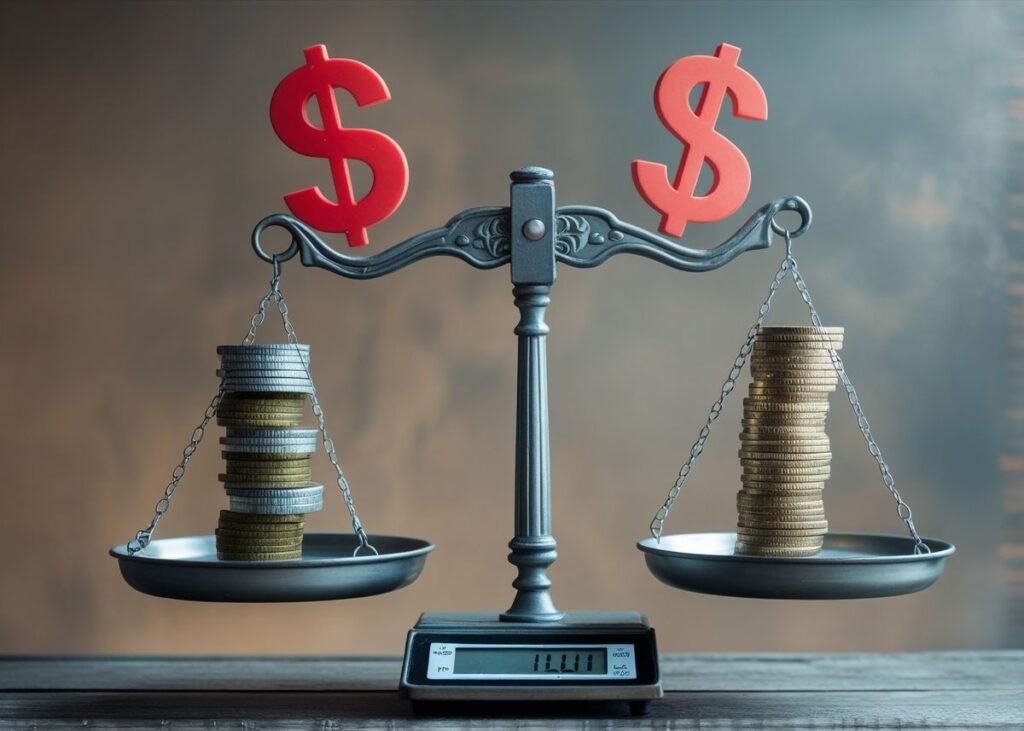
6. Cap Rates and Value Creation
Cap rates can also help us understand how changes in NOI may affect property value.
As a simplified example, if an industrial property produces $800,000 in NOI and the applicable market cap rate is 8%, an implied value based on that income would be approximately $10 million.
If NOI increases to $1 million and the same 8% cap rate is applied, the implied value would be approximately $12.5 million.
This illustrates an important concept: changes in property income can influence valuation.
But this is a simplified example, not a prediction.
The applicable cap rate can change. Market conditions can change. Expenses can change. Vacancy can increase. Capital expenditures can be higher than expected. And improvements intended to increase income may not produce the anticipated results.
That is why we focus on understanding the assumptions behind any potential value-creation strategy.
The numbers have to make sense before the strategy does.
7. Relationships and Transparency Still Matter
Cap-rate analysis may be quantitative, but commercial real estate remains a relationship-driven business.
A broker who knows the property can provide context that isn’t always visible in a spreadsheet.
A seller can explain the history behind the asset.
An investor may have specific objectives that influence how they evaluate risk and opportunity.
That is why CommercialGRP places such a strong emphasis on communication.
Our Core Values—including Motivation & Commitment, Outstanding Communication, Self-Reliance & Attention to Detail, and Honesty & Integrity—shape how we approach acquisition opportunities.
We want brokers and partners to understand where we stand.
If we need more information, we communicate it.
If an opportunity fits our strategy, we engage seriously.
If the numbers don’t support moving forward, we believe in being straightforward about that as well.
A disciplined acquisition process isn’t just about spreadsheets.
It is also about building relationships where people know they can rely on one another.

8. The Right Cap Rate Depends on the Right Property
Cap rates are useful because they provide a common framework for discussing value.
But they are not a shortcut to making an acquisition decision.
For an industrial property within our 50,000–120,000 square foot focus, we want to understand the complete picture: the asset, the tenants, the leases, the market, the physical condition, the financial performance, and the potential path forward.
That analysis may ultimately support an acquisition—or it may tell us that the opportunity isn’t the right fit.
Both conclusions are valuable.
At CommercialGRP, our goal is to identify opportunities where disciplined analysis and responsible execution can create lasting value while remaining connected to our broader Core Focus of transforming communities and improving lives.
A cap rate can tell us something important about a property.
But it takes a much broader perspective to understand what that number actually means.
Let’s Connect
If you’re a broker with an industrial property between 50,000 and 120,000 square feet, or a select retail opportunity, we’d welcome the opportunity to learn more.
And if you’re an investor looking to better understand how we evaluate property fundamentals, income, valuation, and risk, I’d be glad to start a conversation.
The right acquisition isn’t defined by one number. It’s defined by how the numbers, the property, the market, and the strategy fit together.
Let’s connect and explore the opportunity together.
This article is provided for informational purposes only and does not constitute legal, tax, financial, or investment advice. Cap rates and other real estate metrics are not guarantees of future performance. Readers should consult qualified professionals regarding their individual circumstances.