What We Look for in Industrial Properties Across Different Markets
By Endrina Marchena, Property Sourcing Lead at CommercialGRP
Finding the right commercial real estate opportunity is about more than finding a property that is available.
Across different markets, two industrial buildings can look similar on paper and have completely different potential. Location, tenant demand, physical characteristics, accessibility, lease structure, and the surrounding community all influence how we evaluate an opportunity.
As the person focused on property sourcing at CommercialGRP, I spend a lot of time looking for opportunities that fit our acquisition criteria while also understanding the story behind each property. That means building relationships with brokers, researching markets, asking detailed questions, and knowing when a property deserves a closer look.
Our focus is primarily on industrial properties between 50,000 and 120,000 square feet, along with select retail opportunities. But our sourcing process does not begin and end with square footage.
It begins with understanding what makes a property valuable in its specific market.

1. Location Comes Before the Building
A well-located industrial property can have advantages that extend far beyond the building itself.
When evaluating an opportunity, we look at its relationship to major transportation routes, population centers, employment hubs, other industrial properties, and the businesses and services surrounding it.
But location is not simply about being close to a highway.
We want to understand the broader market:
- Is there established industrial demand?
- What types of businesses operate nearby?
- Is the area experiencing development or reinvestment?
- How accessible is the property for employees, customers, and transportation?
- What competing properties are available?
- What does the local supply of industrial space look like?
These questions help us understand whether a property fits into the larger market story.
A building can have attractive physical characteristics, but if its location does not support the intended use, those characteristics may not translate into long-term value.
That is why market research is such an important part of sourcing.

2. We Look Beyond Square Footage
Square footage is one of the first things we notice when reviewing a property, but it is only one piece of the puzzle.
For our industrial acquisition focus, properties generally fall within the 50,000–120,000 SF range. Within that range, however, there can be enormous differences in functionality.
We look at characteristics such as:
- Clear height
- Loading docks and drive-in doors
- Truck access and circulation
- Parking
- Lot size
- Building configuration
- Office-to-warehouse ratio
- Electrical capacity
- Property condition
- Potential for future improvements
These details can have a meaningful impact on what a property can realistically accommodate.
This is where being self-reliant and detail-oriented becomes important. Good sourcing is not simply about finding properties—it is about gathering enough information to determine which opportunities deserve further evaluation.
Our acquisition criteria and the characteristics we examine in every opportunity are discussed in “What We Look for in Every Industrial Acquisition Opportunity.”
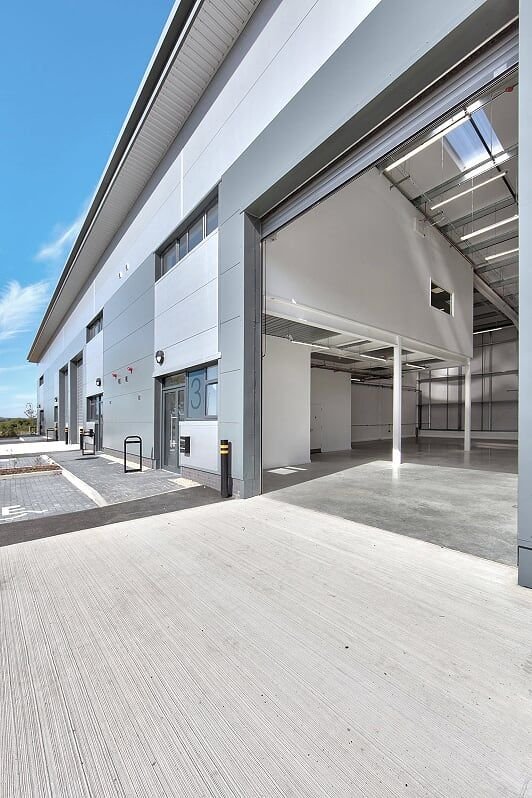
3. Every Market Tells a Different Story
One of the most interesting parts of property sourcing is that there is no universal formula for evaluating every market.
An industrial property in one market may benefit from strong manufacturing demand. Another may be positioned around logistics and distribution. A third may have a growing service-business or contractor tenant base.
The same metric can also mean different things depending on the market.
For example, a certain vacancy level may be normal in one submarket but concerning in another. A particular rental rate may look high until we compare it with nearby properties and understand the tenant demand supporting it.
That is why we avoid evaluating properties in isolation.
We want to understand the market around the asset, the businesses that depend on it, and the trends that could influence demand over time.
For our team, sourcing means connecting the individual property to the larger market picture.

4. Tenant Demand Matters
A building is only as useful as the demand for the space it provides.
When reviewing an industrial opportunity, we want to understand who the likely users are and what they need from a property.
Depending on the market, that could include manufacturers, distributors, contractors, service businesses, logistics companies, wholesalers, or other industrial users.
Existing tenants can also provide valuable information.
We look at lease terms, tenant stability, rental rates, expiration schedules, and the overall tenant mix to better understand the property’s income profile and potential future needs.
A property with strong occupancy is not automatically a strong opportunity, just as a property with some vacancy is not automatically a weak one.
The important question is why.
Understanding the reason behind the numbers allows us to distinguish between a property with structural challenges and one where there may be a realistic path toward improvement.

5. We Pay Attention to Potential, Not Just Current Performance
Some of the most interesting opportunities are not necessarily the properties that look perfect at first glance.
An underutilized building, for example, may have a strong location, good access, and functional characteristics that create opportunities for improvement.
But potential has to be realistic.
We look for properties where there is a logical connection between the current condition and a possible path forward. That might involve improving the physical asset, addressing leasing challenges, repositioning the property, or simply recognizing that an existing tenant and location provide a strong foundation.
This requires careful research and honest conversations.
We do not want to create a story around a property that the fundamentals cannot support.
Instead, our goal is to identify the facts, understand the challenges, and determine whether the opportunity fits our strategy.
That discipline is consistent with how CommercialGRP approaches due diligence. Our “Property Due Diligence Process: Pre-LOI Checklist for Investors” explores many of the questions that should be considered before moving forward.

6. Relationships Are at the Center of Sourcing
Many opportunities begin with a broker reaching out.
That relationship is incredibly valuable.
Brokers are often closest to the market and may know about properties before they are broadly marketed. They understand local owners, tenant situations, upcoming vacancies, and changes that may not yet appear in public data.
That is why communication is such an important part of our sourcing process.
I want brokers to know what we are looking for and feel comfortable bringing opportunities to us. I also believe in providing clear feedback when a property does not fit.
Not every opportunity will meet our criteria—and that is okay.
A transparent “no” is often more valuable than leaving a broker wondering where things stand.
When we communicate openly and follow through on what we say, we create the foundation for relationships that can lead to future opportunities.
For me, sourcing is not about completing one transaction. It is about building a network of trusted relationships that continues to grow over time.

7. The Right Opportunity Should Create Value Beyond the Property
At CommercialGRP, we believe commercial real estate has an impact beyond the walls of a building.
An industrial property can provide space for a growing business. A retail property can support local services and bring activity to a commercial corridor. A well-maintained and productive property can contribute to the surrounding area’s long-term development.
That connects directly to our Core Focus: transforming communities and improving lives.
When we evaluate a property, we consider its investment fundamentals, but we also think about its place within the community.
What businesses could operate there?
How does the property fit into its surroundings?
Could improvements make the property more useful?
Could productive use of an underutilized asset contribute to the local area?
These questions do not replace financial analysis or due diligence. They add another layer of perspective to the sourcing process.
Our article “How Industrial Investments Can Drive Local Economic Growth” explores this connection between commercial real estate and the communities surrounding it.

8. Finding the Right Property Starts With the Right Relationships
Property sourcing is a combination of research, persistence, attention to detail, and relationships.
We need to understand the numbers, but we also need to understand the people and circumstances behind each opportunity.
That means staying motivated and committed when searching for the right property, communicating clearly with brokers and investors, being thorough when reviewing information, and maintaining honesty and integrity throughout the process.
Not every property will fit our buy box. Not every market will have the right opportunity at a given moment. And not every promising-looking asset will withstand deeper analysis.
That is part of the process.
Our goal is to be consistent in how we evaluate opportunities and thoughtful about the ones we pursue—whether we are reviewing a 50,000–120,000 SF industrial property or a select retail opportunity.
If you are a broker with an industrial or retail property that you believe could fit our acquisition criteria, I would love to hear from you. And if you are an investor interested in learning more about how we identify and evaluate opportunities, I welcome that conversation as well.
At CommercialGRP, we are always looking to build relationships with people who value transparency, thoughtful analysis, and long-term collaboration.
Sometimes the right opportunity starts with a property.
Very often, it starts with a conversation.